What “you own your website” actually means.
Almost everyone in the web business says some version of you’ll own your site. Almost nobody means the same thing by it. Here’s what the word actually covers — and what, on most platforms, it leaves out.
A word can do a lot of work in marketing copy. Own is one of those words. Wix tells you you’ll own your site. The freelancer building on WordPress tells you the same. So does the agency that hosts your site on their servers and bills you monthly to keep it running. Three different things — sometimes four — all named the same.
The differences between those promises are worth knowing, because they’re what determine whether the site is actually yours, or whether it just feels that way.
— What ownership actually is
A website is, at bottom, three things. None of them are mysterious, but they’re easy to conflate.
The first is the domain — the address visitors type. yourbusiness.com. Domains are leased from a registrar (Namecheap, Cloudflare, GoDaddy, dozens of others); whoever’s name is on that account owns the domain in the strongest sense the internet recognizes. If your name is on the registration, the address is yours and you can move it elsewhere whenever you want.
The second is the hosting — the place the site actually lives. The server that hands a page to a visitor’s browser when they type in the address. Hosting is also an account at a company; Sevra uses Netlify, but there are dozens of comparable options. Whoever’s name and credit card are on the hosting account controls what’s served, and can move the site to another host or take it offline.
The third is the site itself — the running, deployed website that people see when they visit. Not the source files on someone’s laptop, but the live thing. Once the domain points at the host and the host is serving the files, the site exists as a running entity. It keeps running, with or without anyone tending to it, until something in the chain stops working or someone turns it off.
Genuine ownership of a website means owning all three layers. Your name on the domain registration. Your name on the hosting account. The running site sitting on accounts that are also yours. That’s what yours means in the strongest sense the word can mean.
— Where most platforms differ
Where this gets interesting — and where own starts taking on water — is what happens to those layers on most popular platforms.
A Wix or Squarespace site might use your domain, but the site itself is bound to the platform’s hosting. You can’t move it anywhere else; if you leave the platform, you leave the site behind. The domain, at best, is yours and portable. The site is not. It exists inside the platform and can’t survive outside it.
A typical agency arrangement reverses a different layer. The site might be technically portable — built on WordPress or a custom stack that could in principle live anywhere — but the agency is the registrant on the domain, the agency owns the hosting account, and the credentials sit in the agency’s password manager. If the relationship ends, the agency holds the keys.
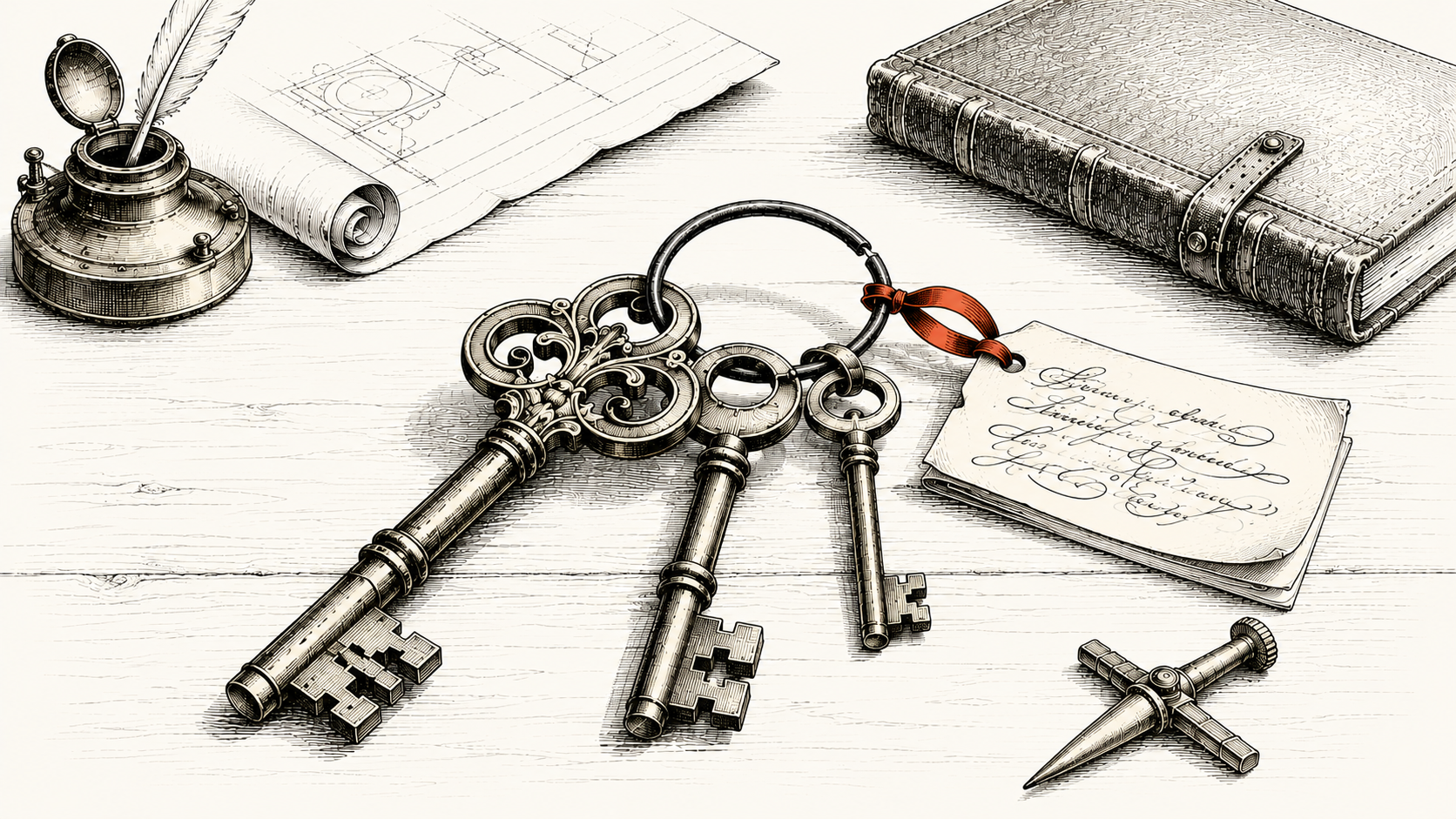
There’s a question that sits underneath all of this: who’s the billing contact on the hosting account? Who gets the recovery email if the password is lost? Who’s the registrant on file at the domain registrar? Whose credit card pays for the renewal that keeps the domain from expiring? On a typical built-by-someone-else site, the answers to those questions are routinely the someone else. The site exists, you pay them money for it, and you call them when something breaks. That isn’t ownership — it’s a service relationship in ownership clothing.
If you can’t take it with you, you don’t own it.
— The walk-away test
Here’s an easy way to check whether you actually own your website. Imagine that the person who built it disappears tomorrow — moves to a different career, vanishes, becomes unreachable for any reason.
Two questions. Does the site still run? And can you take it somewhere else if you want to?
For a Sevra site, both answers are yes. The domain is registered in your name, at a registrar account you log into. The hosting account is in your name, with your card on file. The site is deployed and running, and if you don’t touch it, it keeps running indefinitely. If you decide later to move it to a different host or hand it to a different designer, you have the credentials to do that and nothing technical is in the way.
For a typical platform-built site, the first answer is yes — the platform keeps serving it as long as you keep paying — but the second is no. The site can’t leave the platform. For a typical agency-built site, both answers depend on whose name is on the accounts, which is rarely volunteered up front and is usually a phone call away from being uncomfortable.
None of this is an argument that platforms are bad. They serve a real need — anyone who genuinely wants to build their own site in an afternoon should use one, because that’s what they’re for. The same goes for agencies; some clients want a vendor relationship and don’t want to think about hosting credentials, and that’s a real preference.
The argument is just that own is a word that covers a wide spread of arrangements, and the spread matters. Knowing which arrangement is being offered is worth more than the word itself.
If your name is on the domain, your name is on the hosting, and the site keeps running on its own, you own it. If those aren’t true, you have something else — which might be fine, but it isn’t ownership.